Professional Vehicle Photography and Listing Content That Sells Cars
· By AutoFeed Editorial · vehicle photography best practices, car listing content, automotive photography for dealers, vehicle description writing, dealership photography tips, car listing optimisation
Why Vehicle Photography and Content Quality Determine Sales Success
High-quality vehicle photography and well-crafted listing content directly influence conversion rates, with professional images increasing enquiry rates by substantial margins compared to poor-quality alternatives. Online car buyers form initial judgements within seconds of viewing a listing, making visual presentation and descriptive accuracy the primary factors in whether they contact your dealership or move to a competitor's vehicle. The combination of comprehensive photography coverage, proper lighting technique, and detailed yet scannable written content creates the trust necessary for buyers to progress from browsing to serious consideration.
When your stock appears across multiple automotive marketplaces, consistency in photography quality and content detail becomes even more critical. Buyers comparing similar vehicles across platforms will gravitate toward listings that provide complete information and inspire confidence through professional presentation. Poor photography or incomplete descriptions create doubt about vehicle condition and dealer professionalism, regardless of the actual quality of your stock.
Essential Vehicle Photography Equipment and Setup
Professional vehicle photography requires surprisingly modest equipment when technique is sound. A modern smartphone with a quality camera (12MP or higher) produces acceptable results for most dealership applications, though a dedicated digital camera with manual controls offers greater flexibility. The camera itself matters less than understanding lighting, composition, and consistency across your inventory.
Your photography location significantly impacts final image quality. An outdoor space with even, diffused natural light produces the most flattering results without requiring expensive lighting equipment. Overcast days provide ideal conditions, as cloud cover acts as a natural diffuser, eliminating harsh shadows and reflections that plague sunny-day photography. Early morning or late afternoon light on clear days offers warm tones but requires careful angle management to avoid extreme shadows.
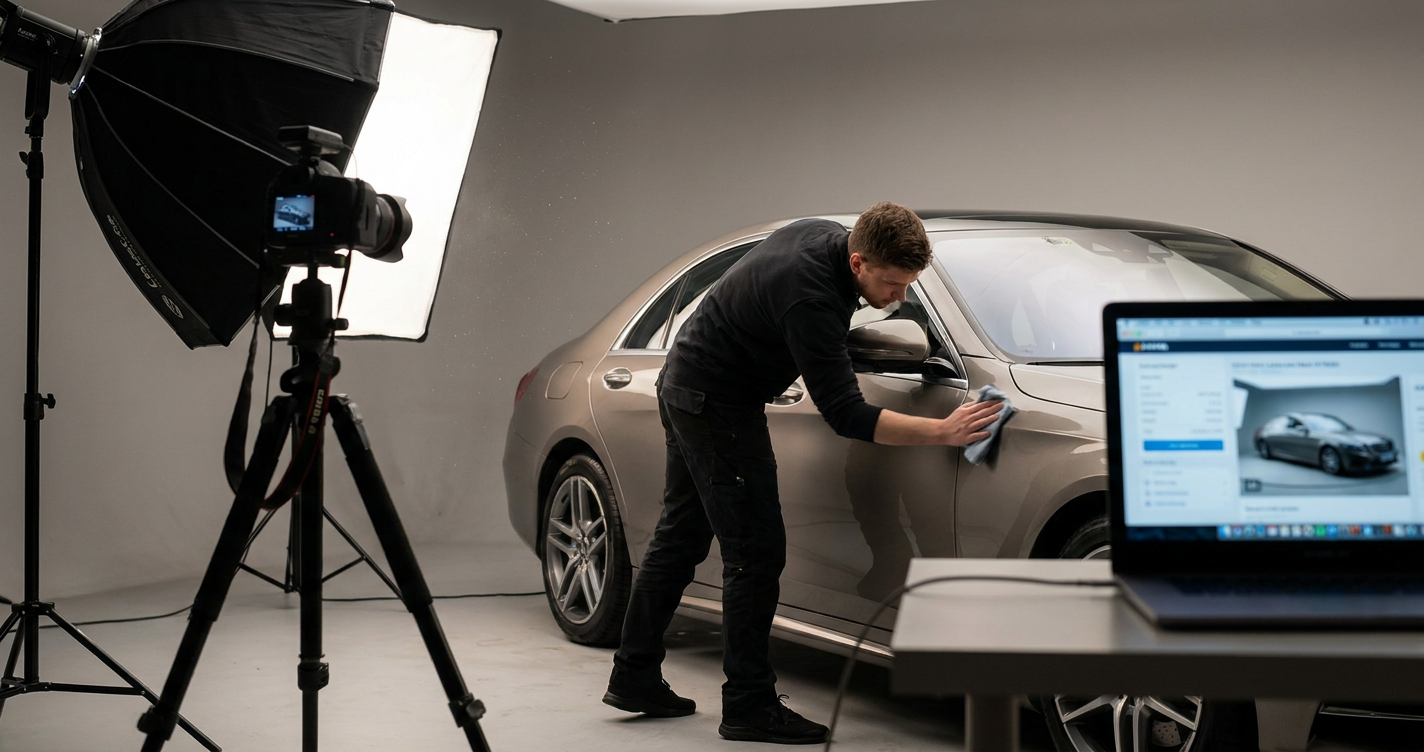
Indoor photography demands artificial lighting but provides weather independence and consistent conditions. A minimum of two adjustable LED panels positioned at 45-degree angles to the vehicle eliminates most shadows whilst maintaining natural colour rendering. Avoid overhead fluorescent lighting, which creates unflattering colour casts and harsh reflections on paintwork and glass.
Background selection deserves careful consideration. Plain, neutral backgrounds (grey, beige, or subtle branded backdrops) keep buyer attention focused on the vehicle itself. Cluttered backgrounds with other vehicles, equipment, or buildings distract from your subject and appear unprofessional. If outdoor photography is your only option, position vehicles against plain walls or use shallow depth-of-field techniques to blur distracting backgrounds.
Comprehensive Photography Coverage: The Complete Shot List
Systematic coverage ensures potential buyers receive complete visual information about every vehicle. A standard shot list maintains consistency across your inventory whilst reducing photography time through established routine.
Exterior photography should include front three-quarter view (the primary listing image), rear three-quarter view, direct side profiles from both sides, straight-on front view, and straight-on rear view. These seven angles provide complete exterior coverage. Capture any notable features separately: alloy wheel close-ups, roof rails, tow bars, parking sensors, or distinctive styling elements that differentiate the vehicle.
Interior photography requires equal thoroughness. Dashboard and steering wheel view from the driver's seat position, front seats from multiple angles showing condition and features, rear seats demonstrating space and condition, boot space with seats up and (where applicable) folded down, and close-ups of infotainment systems, gear selectors, and control interfaces. Document any premium features: leather upholstery texture, panoramic sunroof, ambient lighting, or advanced driver assistance displays.
Mechanical and condition documentation builds buyer confidence. Engine bay shots (cleaned beforehand) demonstrate maintenance care, tyre tread close-ups show remaining life, service book or digital service history screenshots provide maintenance verification, and any cosmetic imperfections should be photographed honestly to manage buyer expectations and reduce post-viewing disappointment.
Most successful dealers capture between 20 and 35 images per vehicle. This comprehensive coverage addresses buyer questions before they need to ask, reducing unnecessary enquiries whilst increasing qualified leads from buyers who have already verified the vehicle meets their requirements.
Technical Photography Best Practices
Image composition fundamentals apply regardless of equipment sophistication. Position the camera at vehicle mid-height (approximately bonnet level) rather than shooting downward from standing height, which distorts proportions and appears amateurish. Maintain level horizons; tilted images suggest carelessness and reduce perceived professionalism.
Fill the frame with your subject whilst leaving modest breathing room at edges. Vehicles should occupy approximately 70-80% of the frame for primary listing images. Excessive empty space reduces visual impact in thumbnail views, where most buyers make initial decisions.
Lighting technique separates professional results from amateur snapshots. Avoid direct flash, which creates harsh reflections on paintwork and glass whilst flattening three-dimensional form. Natural light from the side (90 degrees to camera position) reveals body lines and creates depth through subtle shadows. When using artificial lighting, position sources to mimic natural light angles.
Reflection management requires attention, particularly on dark-coloured vehicles and glass surfaces. Position yourself and equipment to minimise reflections in windows and paintwork. Polarising filters (for dedicated cameras) reduce glare on glass and enhance paint depth. Alternatively, adjust shooting angles slightly to move reflections outside the primary subject area.
Colour accuracy matters significantly in automotive retail. Ensure white balance settings match your lighting conditions (daylight, cloudy, or artificial presets). Buyers who arrive expecting a specific colour based on listing photos but find reality differs will question other aspects of your listing accuracy.
Post-Processing: Enhancement Without Deception
Moderate image editing improves presentation without misrepresenting vehicle condition. Basic adjustments include cropping to remove distracting elements, straightening horizons, and adjusting exposure to ensure the vehicle is clearly visible without appearing artificially bright.
Colour correction ensures accurate representation of paint colour, particularly important for metallic and pearl finishes that photograph differently under various lighting conditions. Slight saturation increases can restore vibrancy lost in photography, but excessive enhancement that misrepresents actual colour creates disappointed viewers and wastes everyone's time.
Background cleanup removes minor distractions (litter, equipment, other vehicles partially in frame) that detract from professional appearance. However, avoid airbrushing or removing actual vehicle imperfections. Honest documentation of condition builds trust and reduces post-viewing disputes.
Consistency in editing style across your inventory creates cohesive brand presentation when buyers view multiple listings. Establish standard brightness, contrast, and saturation levels, then apply similar adjustments to all images. This consistency becomes particularly important when your stock synchronises across multiple platforms through automated systems, ensuring uniform presentation regardless of where buyers encounter your inventory.
Writing Vehicle Descriptions That Convert Browsers to Buyers
Effective vehicle descriptions balance comprehensive information with readability. Start with a compelling opening sentence that highlights the vehicle's primary selling points: desirable specification, low mileage, full service history, or particular condition. This opening determines whether buyers read further or move to the next listing.
Structure descriptions for scannability. Use short paragraphs (2-3 sentences maximum) separated by line breaks. Bullet points work well for feature lists and specification details. Buyers skim rather than read word-for-word, so formatting that facilitates quick information extraction increases engagement.
Include essential specification details systematically: registration year and plate, exact mileage, engine size and fuel type, transmission type, body style and door count, exterior and interior colours, and tax and MOT expiry dates. Missing basic information forces buyers to contact you for details they expect in the listing, creating friction that loses sales to more complete competitors.
Highlight desirable features and equipment explicitly. Don't assume buyers will recognise trim level implications. List key features: navigation systems, parking assistance, climate control, premium audio, safety technology, and convenience features. Buyers search using feature-specific terms, so detailed feature documentation improves marketplace-specific search visibility.
Service history and condition information builds confidence. State service history status clearly (full main dealer, full service history, partial, or none). Mention recent maintenance, new tyres, or recent MOT passes. Address any cosmetic imperfections honestly with context: minor age-related marks, small parking scuffs, or stone chips are expected on used vehicles and acknowledging them demonstrates transparency.
Optimising Content for Search and Marketplace Algorithms
Marketplace search algorithms prioritise listings with complete, detailed information. Comprehensive descriptions containing relevant search terms improve visibility in buyer searches, whilst sparse descriptions reduce discoverability regardless of vehicle desirability.
Incorporate natural search terms buyers actually use: make and model (including variant names), body style descriptors (estate, saloon, hatchback, SUV), colour names, feature terms (leather, navigation, automatic, diesel), and location references where appropriate. Avoid keyword stuffing; write naturally whilst ensuring relevant terms appear.
Title optimisation matters significantly for search visibility. Include make, model, variant/trim level, key features (if space permits), and registration year within marketplace character limits. "2020 BMW 3 Series 320d M Sport Auto" outperforms "BMW 3 Series" in search relevance and click-through rates.
When managing inventory across multiple marketplaces, maintaining consistent yet platform-optimised content becomes challenging without systematic approaches. Automated synchronisation systems ensure your photography and content updates propagate across all platforms simultaneously, maintaining quality standards whilst eliminating repetitive manual updates.
Common Photography and Content Mistakes to Avoid
Several recurring errors undermine otherwise professional listings. Inconsistent image quality within a single listing (mixing professional shots with poor-quality smartphone snapshots) appears careless and raises questions about attention to detail. Maintain uniform quality across all images for each vehicle.
Dirty vehicles in photographs suggest poor preparation and maintenance standards. Always photograph clean vehicles, inside and out. The hour spent on preparation returns multiples in improved buyer perception and enquiry quality. Similarly, cluttered interiors (papers, air fresheners, personal items) distract from the vehicle and appear unprofessional.
Vague or generic descriptions fail to differentiate your vehicle from competitors. Phrases like "excellent condition" or "drives beautifully" without supporting detail lack credibility. Specific information ("recently serviced at 45,000 miles", "four matching premium tyres fitted in March") provides substance that builds buyer confidence.
Incomplete or inaccurate information damages trust and wastes time. Verify all specification details before publishing. Errors in basic information (incorrect registration year, wrong engine size, inaccurate mileage) destroy credibility and suggest either carelessness or deliberate misrepresentation.
Maintaining Quality Standards Across Growing Inventory
As dealership inventory scales, maintaining consistent photography and content quality becomes increasingly challenging. Systematic processes prevent quality degradation under volume pressure. Establish standard operating procedures documenting your shot list, photography settings, editing standards, and content templates. Train all staff involved in listing creation to these standards.
Quality control checkpoints catch errors before publication. Implement a review process where a second person verifies image quality, content accuracy, and completeness before listings go live. This additional step prevents the costly errors that occur when rushing to publish new stock.
Time investment in quality photography and content creation pays substantial returns through higher conversion rates and reduced time-to-sale. However, the administrative burden of maintaining this quality across multiple platforms whilst managing other dealership operations creates bottlenecks. Understanding the true cost of manual stock management helps contextualise whether automation investment makes commercial sense for your operation.
Template systems speed content creation without sacrificing quality. Develop description templates for common vehicle types and trim levels, then customise with specific details for each unit. This approach maintains thoroughness whilst reducing writing time from 15-20 minutes per vehicle to 5-7 minutes.
Measuring Photography and Content Effectiveness
Track metrics that indicate listing performance. View-to-enquiry conversion rates reveal whether your listings effectively convert browsers into serious buyers. Compare conversion rates between vehicles with comprehensive photography versus minimal coverage to quantify the impact of thoroughness.
Time-to-sale correlates with listing quality. Vehicles with professional photography and detailed descriptions typically sell faster than similar vehicles with poor presentation, even at comparable prices. Monitor average days-to-sale segmented by listing quality to demonstrate return on photography investment.
Marketplace analytics (where available) show which images buyers view most frequently and how far they scroll through descriptions. This data informs shot list priorities and content structure decisions. If buyers consistently view certain angles or features, ensure these receive prominent placement in your standard approach.
A/B testing different approaches provides concrete evidence of what works. Try varying primary listing images, description structures, or feature emphasis across similar vehicles, then compare performance metrics. Small improvements in conversion rates compound significantly across annual inventory turnover.
Integrating Quality Content with Efficient Stock Management
High-quality photography and content creation requires significant time investment, making efficient distribution across sales channels essential to maximise return on that effort. Creating excellent listings but then manually copying them across multiple marketplaces wastes the time savings that quality content should enable through faster sales.
Automated stock synchronisation ensures your quality photography and carefully crafted descriptions appear consistently across all platforms where you advertise. When you update a listing, correct an error, or add additional images, those changes propagate automatically rather than requiring manual updates on each marketplace.
This integration between content quality and distribution efficiency creates a multiplier effect. Better content drives higher conversion rates, whilst automated distribution ensures that better content reaches maximum audience without proportional time investment. The combination allows you to maintain quality standards whilst scaling inventory and marketplace presence.
Frequently Asked Questions
How many photographs should each vehicle listing include?
Between 20 and 35 images provides comprehensive coverage that addresses buyer questions without overwhelming them. This range includes all major exterior angles, thorough interior documentation, boot space, engine bay, and close-ups of notable features or any condition issues. Fewer than 15 images suggests incomplete documentation, whilst more than 40 often includes redundant shots that don't add value. Focus on coverage completeness rather than arbitrary image counts.
Should I photograph vehicles in all weather conditions or wait for ideal lighting?
Consistent photography standards matter more than perfect conditions for every vehicle. Establish a minimum acceptable standard (clean vehicle, adequate lighting, complete shot list) and photograph in any conditions meeting that threshold. Waiting for perfect weather creates inventory bottlenecks that delay listings and reduce stock turnover. Overcast conditions actually provide excellent diffused lighting, whilst light rain can enhance paint depth. Avoid only heavy rain or extreme conditions that prevent proper vehicle cleaning or create safety issues.
How detailed should I be about vehicle condition issues in descriptions?
Document all visible condition issues honestly with appropriate context. Minor age-appropriate wear (small scratches, slight interior wear, minor stone chips) should be mentioned but framed as normal for the vehicle's age and mileage. Photograph any cosmetic damage clearly. This transparency builds trust, manages buyer expectations, and reduces post-viewing disappointment that wastes everyone's time. Buyers appreciate honesty and are more likely to proceed when they know exactly what to expect, whilst discovering undisclosed issues during viewing often ends negotiations immediately.
Can I reuse the same description template across similar vehicles?
Template descriptions work well as starting points but require customisation for each specific vehicle. Create templates containing standard structure and common features for vehicle types you stock regularly (family SUVs, executive saloons, hot hatches), then modify with specific details: actual mileage, service history status, equipment fitted to this particular unit, and unique selling points. Generic descriptions that could apply to any vehicle fail to differentiate your stock and reduce buyer confidence. The time saved using templates should be invested in adding specific, accurate details that make each listing unique.
How do I maintain photography quality when processing high inventory volumes?
Systematic processes maintain quality under volume pressure. Create a documented photography checklist covering your standard shot list, preparation requirements (cleaning standards, interior tidying), and technical settings. Batch similar tasks together: photograph multiple vehicles in sequence when lighting conditions are optimal, then process all images in a dedicated editing session. Establish quality control checkpoints where someone reviews listings before publication. Consider whether your current manual approach to stock management creates bottlenecks that compromise quality, and evaluate whether automation investment would allow you to maintain standards whilst growing inventory.
Conclusion: Quality Content as Competitive Advantage
Professional vehicle photography and comprehensive listing content create measurable competitive advantages in increasingly crowded online marketplaces. Buyers comparing similar vehicles across multiple dealers gravitate toward listings that provide complete information through quality imagery and detailed descriptions. The time invested in proper photography and content creation returns through higher conversion rates, faster sales, and improved dealership reputation.
Consistency matters as much as quality. Establishing systematic approaches to photography, content creation, and quality control ensures every vehicle receives professional presentation regardless of inventory volume or operational pressure. When combined with efficient distribution systems that maintain this quality across multiple sales channels, the result is maximum visibility and conversion from your stock investment.
How many photographs should each vehicle listing include?
Between 20 and 35 images provides comprehensive coverage that addresses buyer questions without overwhelming them. This range includes all major exterior angles, thorough interior documentation, boot space, engine bay, and close-ups of notable features or any condition issues. Fewer than 15 images suggests incomplete documentation, whilst more than 40 often includes redundant shots that don't add value. Focus on coverage completeness rather than arbitrary image counts.
Should I photograph vehicles in all weather conditions or wait for ideal lighting?
Consistent photography standards matter more than perfect conditions for every vehicle. Establish a minimum acceptable standard (clean vehicle, adequate lighting, complete shot list) and photograph in any conditions meeting that threshold. Waiting for perfect weather creates inventory bottlenecks that delay listings and reduce stock turnover. Overcast conditions actually provide excellent diffused lighting, whilst light rain can enhance paint depth. Avoid only heavy rain or extreme conditions that prevent proper vehicle cleaning or create safety issues.
How detailed should I be about vehicle condition issues in descriptions?
Document all visible condition issues honestly with appropriate context. Minor age-appropriate wear (small scratches, slight interior wear, minor stone chips) should be mentioned but framed as normal for the vehicle's age and mileage. Photograph any cosmetic damage clearly. This transparency builds trust, manages buyer expectations, and reduces post-viewing disappointment that wastes everyone's time. Buyers appreciate honesty and are more likely to proceed when they know exactly what to expect, whilst discovering undisclosed issues during viewing often ends negotiations immediately.
Can I reuse the same description template across similar vehicles?
Template descriptions work well as starting points but require customisation for each specific vehicle. Create templates containing standard structure and common features for vehicle types you stock regularly (family SUVs, executive saloons, hot hatches), then modify with specific details: actual mileage, service history status, equipment fitted to this particular unit, and unique selling points. Generic descriptions that could apply to any vehicle fail to differentiate your stock and reduce buyer confidence. The time saved using templates should be invested in adding specific, accurate details that make each listing unique.
How do I maintain photography quality when processing high inventory volumes?
Systematic processes maintain quality under volume pressure. Create a documented photography checklist covering your standard shot list, preparation requirements (cleaning standards, interior tidying), and technical settings. Batch similar tasks together: photograph multiple vehicles in sequence when lighting conditions are optimal, then process all images in a dedicated editing session. Establish quality control checkpoints where someone reviews listings before publication. Consider whether your current manual approach to stock management creates bottlenecks that compromise quality, and evaluate whether automation investment would allow you to maintain standards whilst growing inventory.